
Myopia Management
Myopia Management in Blue Island
What is myopia?
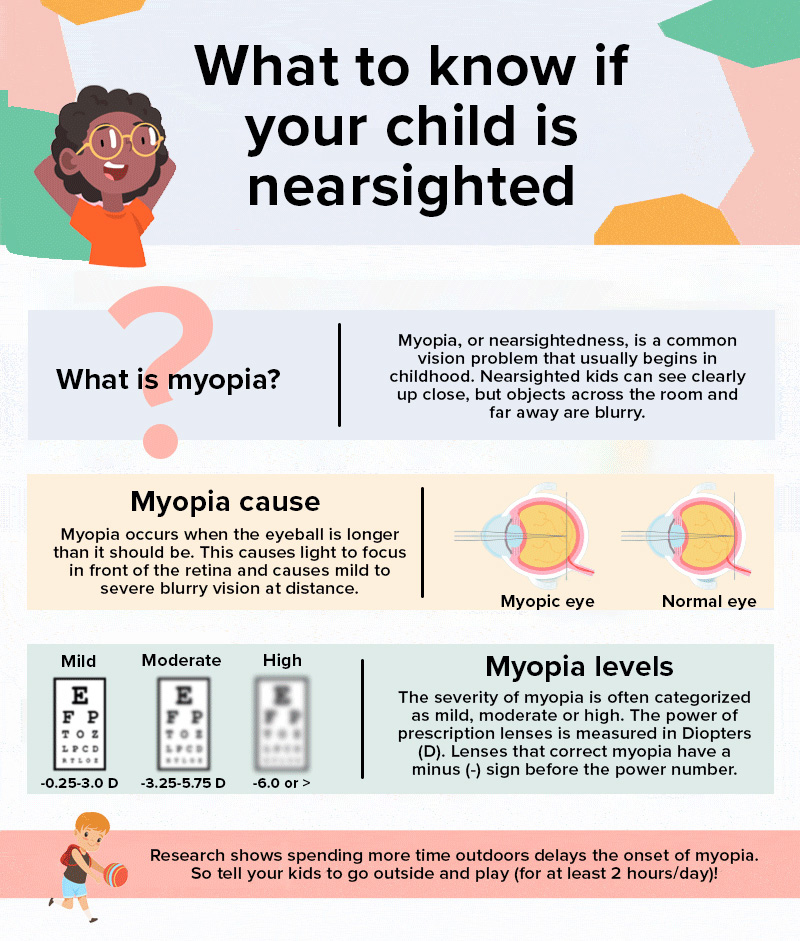
Myopia, also known as nearsightedness, occurs when patients can see near objects clearly, but have blurred vision when looking at distant objects. This condition is caused by the excessive growth and elongation of the eye over time, which results in stretching of the neurological tissue of the eye. These changes result in progressive vision loss and prescription changes. Glasses become thicker and heavier with higher levels of myopia. The higher the myopia, the greater the physical elongation of the eye.
Myopia is associated with an increase in vision-threatening eye diseases such as retinal detachments, cataracts, glaucoma, and myopic macular degeneration later in life.
How common is myopia?
Myopia (nearsightedness) is on the rise worldwide, affecting roughly 1 in 3 children globally, a significant increase compared to past decades.¹ The condition typically begins in childhood while the eyes are still developing and can continue to progress through adolescence and young adulthood, leading to worsening vision over time.
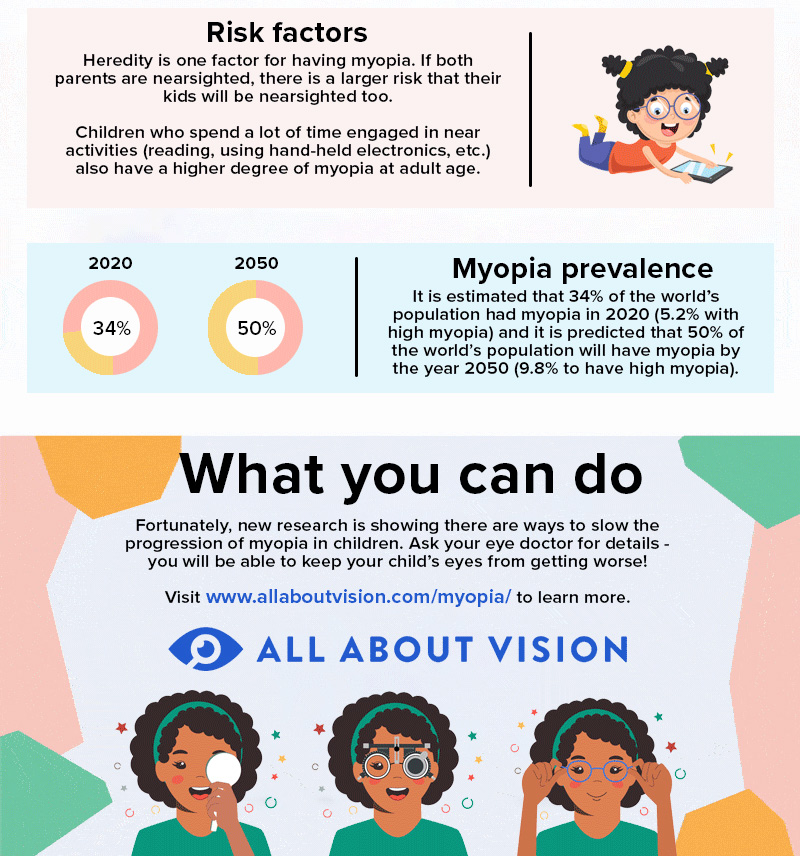
Research predicts that half of the world’s population could be nearsighted by 2050,¹ highlighting the importance of early detection and management.
What are the symptoms of myopia?
Signs of myopia can include:
- Blurry vision when looking at faraway objects
- Squinting to see objects clearly
- Eye strain
- Experiencing headaches caused by straining the eyes
Myopia can impact more than just vision. It may also affect a child’s schoolwork, sports, social activities, independence, and even self-confidence.
What causes myopia?
Genetics plays a role in the development of myopia. Children with two nearsighted parents are up to six times more likely to develop myopia compared to children with no nearsighted parents.²
Certain environmental and lifestyle factors also influence the development of myopia. Factors that increase the risk of myopia include prolonged near-work activities, not enough time spent outdoors, and poor lighting.
What is myopia management?
Myopia management is a program that uses proven, evidence-based treatments to slow the progression of nearsightedness in children. In the past, it was thought that nothing could be done to reduce myopia progression. However, recent research shows that effective options now exist to help protect your child’s vision as they grow.
What are the main treatment options for managing myopia?
Each myopia management treatment has varying benefits and levels of efficacy. Our knowledgeable and experienced doctors and staff can help you decide which method is most suitable for your child, depending on their needs, lifestyle, age, and myopia level.
Orthokeratology (Ortho-K)
Orthokeratology is an FDA-approved, non-surgical treatment option that gently reshapes the curvature of the eye while you are asleep, so you can see clearly during the day without glasses or daytime contact lenses. Ortho-k lenses are also an effective solution for slowing the progression of nearsightedness over time.
Low-dose atropine eye drops
A carefully diluted atropine solution that your child uses each night before bedtime to help slow the progression of myopia.
Multifocal contact lenses
Specially designed multifocal lenses help slow myopia progression by reducing eye strain during close-up activities like reading and screen use. These lenses provide clear vision at multiple distances while supporting healthier eye development as your child grows.
MiSight 1 Day contact lenses
MiSight is a daily disposable, soft contact lens that not only corrects distance vision but has the added benefit of being clinically proven and FDA-approved to slow myopia progression in children.
Why is myopia management important for my child?
Children who start a myopia management program not only enjoy clearer vision now, but also experience slower myopia progression as they get older, reducing long-term risks.
The short-term benefits of myopia management include clearer vision for daily activities and greater visual comfort. It also allows children to enjoy a more active lifestyle for swimming, tennis, contact sports, and other activities—without relying on glasses during the day.
The long-term benefits of myopia management include decreased changes in the shape of the eye, fewer prescription changes over time, and a reduced risk of glaucoma, cataracts, retinal detachment, and other ocular diseases later in life. Schedule an appointment to learn more about myopia management for yourself or your child.
References: