
Diabetic Eye Exam
in Blue Island

Diabetes can have a serious impact on your vision, often without noticeable symptoms in the early stages. A diabetic eye exam in Blue Island allows our eye doctor to detect signs of diabetic eye disease early, monitor changes over time, and recommend the appropriate care to help protect your sight.
At Vision Salon Eye Care Associates, we provide comprehensive, individualized eye care for patients with diabetes and those at risk, focusing on prevention, early intervention, and long-term eye health.
The importance of annual diabetic eye exams
Diabetes can damage small blood vessels throughout the body, including delicate blood vessels inside the retina. This may lead to diabetic retinopathy, diabetic macular edema, glaucoma, or an increased risk of cataracts.¹
Early detection and routine eye exams are critical because vision loss from diabetic eye disease can often be prevented or minimized with timely care. In fact, up to 90% of diabetes-related vision loss can be prevented or delayed through early detection and consistent management.²
Even if your vision seems normal, changes may already be occurring inside the eye. Comprehensive eye exams give us a chance to monitor your eye health closely and identify subtle changes before they progress.
What to expect during a diabetic eye exam
During your diabetic eye exam in Blue Island, we evaluate both your vision and eye health. Depending on your individual needs, your visit may include:
A review of your medical and vision history
We discuss your diabetes diagnosis, medications, blood sugar management, A1C levels, vision concerns, and any symptoms you may be experiencing.
Comprehensive vision testing
Your exam may include testing for visual acuity, prescription changes, eye coordination, focusing ability, and overall visual function.
A retinal evaluation
We carefully examine the retina, optic nerve, and retinal blood vessels for signs of diabetic eye disease, including bleeding, swelling, leaking blood vessels, or abnormal vessel growth.
Advanced imaging and diagnostic testing
Digital imaging and retinal scans help us document and monitor the health of your eyes with precise detail.
Personalized recommendations & education
After your exam, we review your results, explain any findings, and discuss recommendations for follow-up care, monitoring frequency, lifestyle considerations, or treatment if needed.
Collaborative care & referrals
Managing diabetic eye health often requires coordination between multiple healthcare providers. We work closely with your primary care physician, endocrinologist, and other members of your healthcare team to support diabetes management and reinforce strategies to prevent ocular complications from diabetes.
If advanced treatment is needed, we coordinate referrals with trusted ophthalmologists and retinal specialists experienced in diabetic retinal disease and surgical care. Our team helps ensure continuity of care and ongoing monitoring throughout the process.
Specialized expertise in diabetic eye care
Our doctors complete extensive continuing education focused specifically on diabetic eye disease and retinal health. This ensures that our diabetic patients and those at higher risk receive the most up-to-date diagnostic testing and treatment options tailored to their individual needs.
Because diabetes can impact each person differently, we tailor our approach to your unique health needs, medical history, lifestyle, and blood sugar management when creating a care and monitoring plan.
Community education and support resources


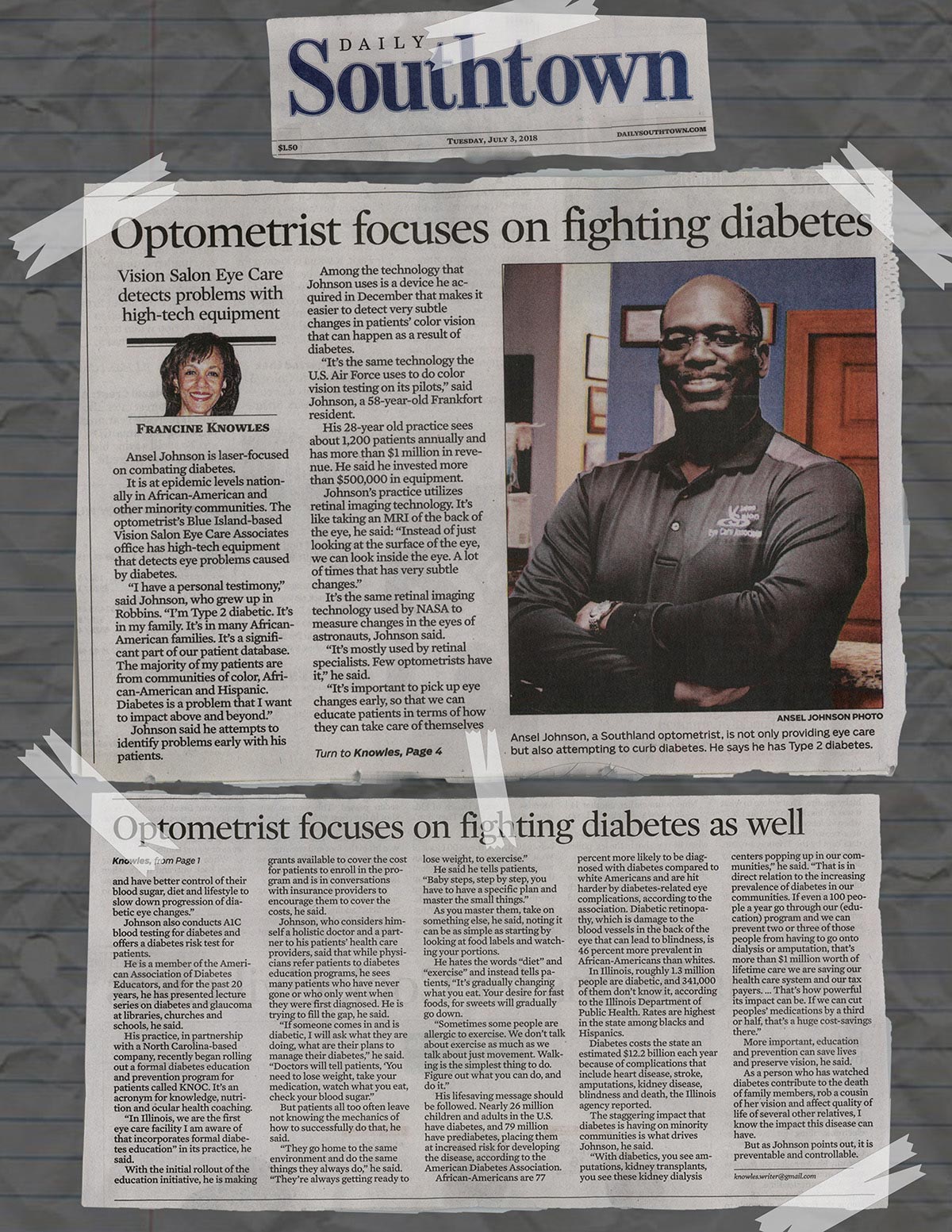
KNOC out Diabetes Program
Our KNOC out Diabetes Program can successfully teach you how to live well with diabetes.
-
Learn how to enjoy and prepare dishes that are simple and healthy. Learn how to have fun being more physically active.
-
Ask to receive information about our online and in-person forums and classes. Many of our programs are in partnership with the Healthy Living With A Vision Foundation.
-
Learn how we can help preserve your eyesight with leading-edge technology for the early diagnosis and treatment of potential vision problems.
We have access to certified diabetes self-management education professionals who support our program. Please call our office today for more information or to receive information about our services.
FREE Diabetes Education and Nutrition Seminar

Andrea Williams, RD, LDN, CDE
Clinical Educator/Diabetes Educator/Dietitian
The seminar is hosted by Vision Salon Eye Care Associates.
Most insurance plans will cover our certified diabetes self-management education and support program.
Pre-register by calling (708) 385-0013
or email info@visionsalon.com
Visit our trusted diabetic eye doctor
Diabetes requires ongoing attention, and your vision is no exception. At Vision Salon Eye Care Associates, we can help you stay consistent with the care and monitoring your eyes need.
Schedule your diabetic eye exam in Blue Island today and stay ahead of potential vision changes.
Diabetic eye care FAQ
How often should I have a diabetic eye exam?
Most patients with diabetes should have a comprehensive diabetic eye exam at least once a year. However, patients with existing diabetic eye disease or higher risk factors may need more frequent monitoring.
Can diabetic eye disease develop without symptoms?
Yes, many forms of diabetic eye disease develop gradually and may not cause noticeable symptoms until vision loss has already occurred. That’s why we recommend seeing us for regular eye exams.
What are the common symptoms of diabetic eye disease?
Symptoms of diabetic eye disease may include:
- Blurry vision
- Fluctuating vision
- Floaters or dark spots
- Distorted or wavy vision
- Difficulty seeing at night
- Sudden vision changes
- Areas of missing or shadowed vision
However, some patients experience no noticeable symptoms in the early stages, which is why you should schedule routine eye exams.
Will my eyes need to be dilated during the exam?
In many cases, yes. Dilation allows our doctors to examine the retina and optic nerve more thoroughly for signs of diabetic damage.
Can controlling diabetes help protect my vision?
Yes, managing blood sugar, blood pressure, and cholesterol levels can significantly reduce the risk of diabetic eye complications and vision loss.
What happens if diabetic eye disease is found?
Treatment depends on the severity and type of disease present. Some patients may simply require closer monitoring, while others may need a referral to a retinal specialist for advanced treatment such as injections, laser therapy, or surgery.
Is retinal imaging a replacement for a dilated eye exam?
Advanced retinal imaging is an important diagnostic tool, but it may not fully replace dilation in all cases. We will recommend the most appropriate testing based on your eye health needs.




