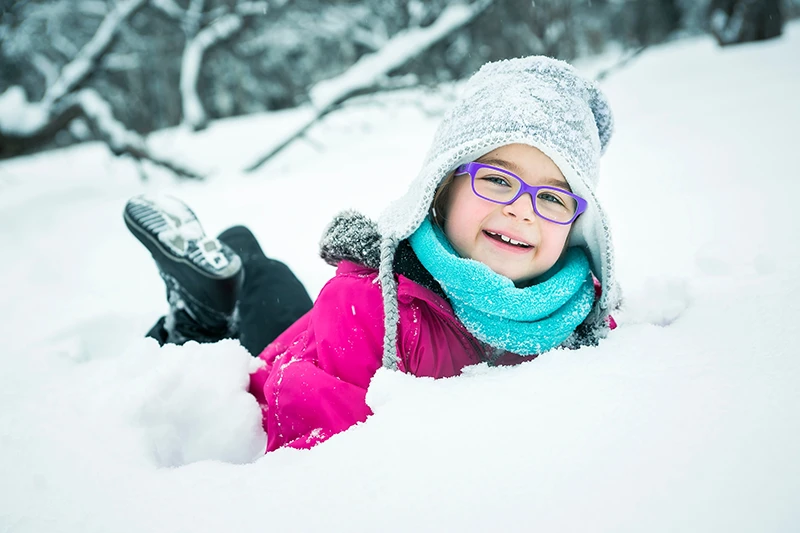
If you’re noticing that your child’s glasses prescription seems to change every year (or every few months), it can feel like you’re constantly playing catch-up. One of the most practical, no-fuss habits we encourage is more outdoor time. Not as a replacement for clinical treatment or myopia management, but as a powerful everyday support that fits into real life: school schedules, sports, screens, and weather included.
The research consistently points in a clear direction¹: regular time outdoors is associated with a lower risk of developing myopia and may help slow progression in kids who are already nearsighted. Let’s talk about what that means in plain language, and how to make it doable for your family.
What’s happening with childhood myopia
Myopia (nearsightedness) typically increases as the eye grows longer from front to back. That extra length changes how light focuses, so distant objects look blurry. In childhood myopia, the eye is still developing, which is why prescriptions can shift quickly during grade-school years and into the teens.
Higher levels of myopia later in life are linked to a greater risk of eye health issues. That’s why slowing progression has become such an important goal.
Why outdoor time helps slow myopia
Outdoor light is dramatically brighter than indoor light, even on cloudy days. That difference seems to matter for eye growth. While scientists are still studying the exact mechanisms, the leading theories include:
- Brighter light exposure may support healthy signaling in the retina that helps regulate eye growth
- Looking farther away more often may reduce constant near focusing demand
- More varied visual environments outdoors give eyes a break from the “same distance, same posture” pattern of indoor work
In other words: outside time isn’t magic, but it’s a healthy input your child’s visual system doesn’t get much of during a typical school day.
How much outdoor time is worth aiming for?
Most families don’t need perfection; they need a target that fits their week. Many studies suggest benefits around 1–2 hours per day of outdoor time, or roughly 10–14 hours per week. If that sounds unrealistic at first, start smaller and build.
Here are flexible ways to get there:
- Walk the dog together after school
- Homework break: 15 minutes outside, then back in
- Weekend “errand swaps”: park time before the grocery run
- Sports practice counts (even on the sidelines)
- Choose outdoor hangouts: chalk, scooters, pickup basketball, nature trails
Outdoor time + myopia management: better together
Outdoor time is a strong lifestyle tool, but it often works best alongside a personalized care plan. If your child’s prescription is changing quickly, we may discuss options such as:
- Myopia control contact lenses designed to slow progression
- Orthokeratology (ortho-k) night lenses that reshape the cornea temporarily
- Prescription eye drops used in specific cases
- Updated glasses strategies that support visual comfort during schoolwork
A key point: myopia management isn’t one-size-fits-all. We look at age, prescription history, eye growth patterns, focusing and teaming skills, and daily habits.
Build a plan that protects your child’s vision long-term
Slowing myopia progression is often about combining small, consistent choices (like more outdoor time) with the right clinical approach for your child. If you’re seeing frequent prescription changes, squinting at distance, or complaints about blurry far vision, it’s worth getting a focused evaluation.
Schedule a myopia management consultation at Vision Salon Eye Care Associates so we can measure what’s happening, talk through options, and build a plan your family can actually follow.